Misogi
A report from Lore

Misogi is not a wellness trend.
It is an origin story.
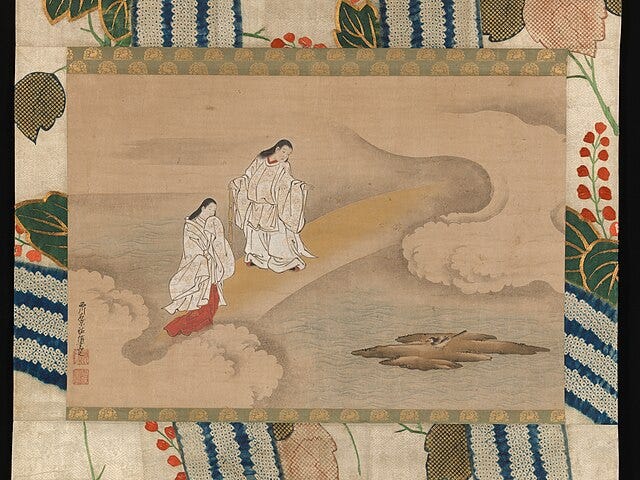
In the earliest Japanese creation myth, the gods Izanagi-no-Mikoto and Izanami-no-Mikoto were tasked with forming the world.
Together, they created the islands of Japan and gave birth to countless kami—gods of wind, water, mountain, tree, and fire.
But creation came with consequence.
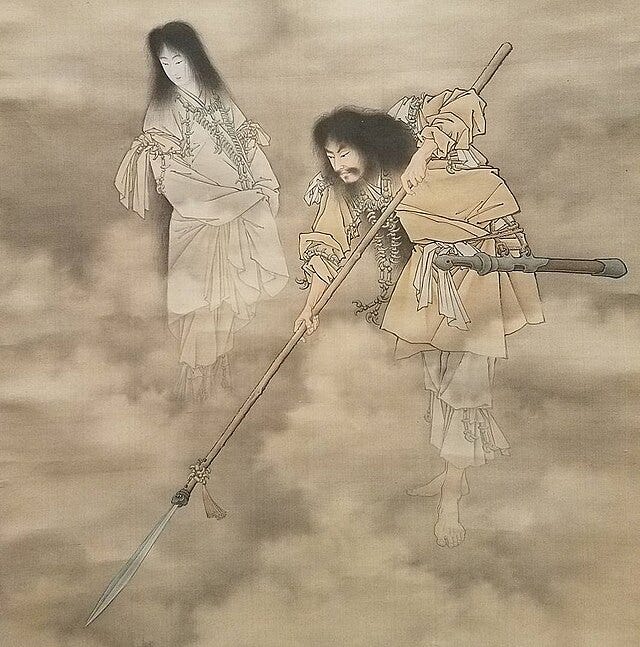
When Izanami gave birth to the fire god, she was fatally burned and descended into Yomi, the underworld—a realm of death, decay, and spiritual pollution. Grief-stricken and unwilling to accept her loss, Izanagi followed her there, hoping to bring her back.
He failed.
In Yomi, Izanami warned him not to look at her. But fear and longing overcame restraint. When Izanagi lit a flame and saw her form, he was confronted with decay—death fully claiming what he loved.
Horrified, he fled. Izanami, enraged, chased him.
The boundary between life and death was sealed forever.
Izanagi escaped the underworld, but he was not free.
In Shinto belief, death is not evil—but it is contaminating. The underworld leaves residue. Darkness clings. Contact with it must be cleansed.
So Izanagi did not return home.
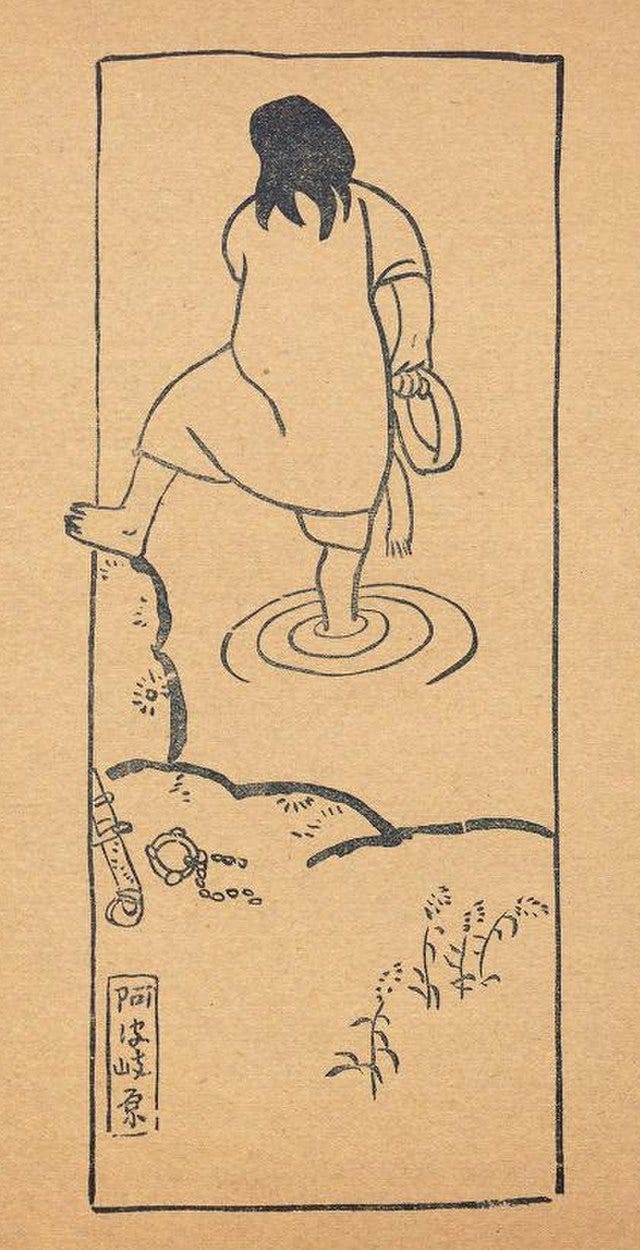
He went to cold, flowing water.
There, he performed misogi—ritual purification through cold wild water immersion. As he washed his body, the pollution of Yomi released.
Light did not come from creation.
It came from cleansing after darkness.
This is the true meaning of misogi.
Not relaxation.
Not comfort.
Not self-improvement.
Misogi exists for moments when something has attached itself to us—grief, fear, excess, stagnation, identity—and words are no longer sufficient.
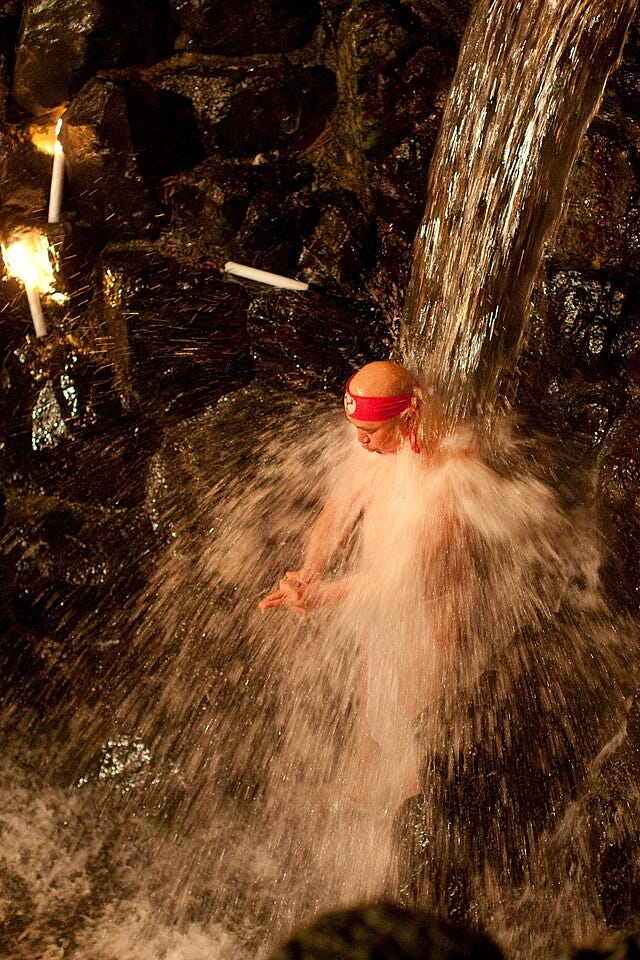
Even today in Japan, people stand beneath freezing waterfalls to cleanse the spirit and body. The water shocks the nervous system, strips away pretense, and forces presence.
The mind quiets not because it is calmed—but because it is overwhelmed into honesty.
Later, the meaning of misogi expanded.
Misogi came to describe any task so difficult that it risks failure.
Something uncomfortable enough to burn away excess.
An act that cannot be done casually.
Modern writers sometimes call this a “misogi challenge”—a voluntary confrontation with difficulty. Not to win. Not to prove toughness. But to emerge clean.
_(1915-04_by_Elstner_Hilton).jpg)


Why This Matters
Modern life rarely asks anything of us that we cannot abandon halfway through.
We can opt out of discomfort at the first sign of resistance.
Over time, this dulls our ability to trust ourselves under stress.
Misogi restores that trust—not by force, but by chosen exposure.
You learn:
• Where your real limits are
• That panic is not danger
• That clarity exists on the far side of resistance
• That you can return safely from intensity
This is not a workout.
It is a conversation with fear, held inside care.
A Final Note
Misogi is done rarely.
Seasonally. Intentionally.
Never casually.
And never for applause.
In the presence of cold water, the body does not lie.
What falls away was never needed.
What remains is pure.
-Adam from Lore
Lore is a new bathing club located at 676 Broadway